UK Documentaries That Changed The Conversation

Available on
Cinema showtimes
You must allow us to access your location in order to see showtimes near you.
The very first films ever made were documentaries, and they remain a key part of cinema and screen entertainment. That’s visible right now at the Cannes Film Festival, where documentaries like Cantona and Maverick: The Epic Adventures Of David Lean are premiering, and it’s specifically being celebrated there with the launch of acclaimed filmmaker Mark Cousin’s tribute to the artform, The Story Of Documentary Film (The 1970s).
Here in the UK, the well-established Sheffield DocFest is gearing up to start in June, with a 2026 theme of ‘Realities in Motion’ centred on “how our lives are continually reshaped by collective action, from climate advocacy and social activism to the enduring power of music.” With that in mind, we decided to take a look at some of the best British-made political documentaries, to see how film has dealt with world-shaking events and how even the most unlikely people can change the course of history. (Should you want to focus on the “music” bit of that theme, check out our previous piece on music documentaries here: https://www.screenuk.org/article/music-docs/ )
If that sounds like we’re overselling it, think again. There’s a film out there literally called How To Change The World, from multi-award-winning documentarian Jerry Rothwell (Sour Grapes). It’s the story of the founding of Greenpeace, the protest movement that fought against nuclear weapons and for the whales, among many other causes. Similarly, Ocean with David Attenborough not only chronicles the nature living in our seas but also suggests a plan to save the oceans, and maybe the world, with strategic limitations on fishing. The Wild Ones looks at the fight to save six endangered species, while The Territory sees an indigenous tribe fight back against encroaching development on their ancient land. But lest you think that it’s all struggle and little success, Wilding shows us what a project to firmly re-establish biodiversity looks like – and it’s beautiful. And from a less likely source, perhaps, Finding Harmony: A King’s Vision also offers a positive view of the future in the form of King Charles discussing his experience of environmentalism.
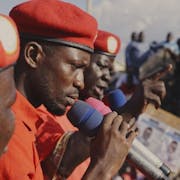
Aside from the environment, there are quite a few films examining the big issues of our time. Copa 71 takes us back to the pioneering women of the 1971 Women’s World Cup, as they fought for recognition in a hostile world, and Merkel looks at the career of one of Europe’s most successful post-War leaders. Black Box Diaries is the extraordinary, sobering story of its filmmaker’s own search for justice after a sexual assault, while The Taste Of Mango examines the challenges women face through three generations of one family. An LGBTQ+ activist and artist’s story is the focus of Queendom, about the Russian performance artist Gena Marvin, while Bobi Wine: The People’s President sees the titular musician enter a presidential race as a political statement.

The Wild Ones

Black Box Diaries
A welcome trend in recent years has been the number of serious and thoughtful documentaries about disability and neurological conditions. Heart of Invictus looks at injured veterans competing in the Invictus Games, and their struggles after serious injury, and filmmaker Ella Glendining looks for people with the same rare disability she has had since birth in Is There Anybody Out There? A more common condition, autism, is explored in The Reason I Jump, and there’s a family journey in Chris Hemsworth: A Road Trip To Remember involving the film star and his father, who has an Alzheimer’s diagnosis. Celebrity chef Heston Blumenthal discusses his experiences in Heston: My Life with Bipolar, while the author and theologian John M. Hull, who lost his sight just before the birth of his son, is the focus of Notes on Blindness. Ozzy: No Escape From Now is similarly philosophical, perhaps surprisingly so given that it’s about the legendary rocker Ozzy Osbourne facing life-limiting illness.
Of course, war is still the focus of some of the most powerful and, at times, upsetting documentaries around. Joshua Oppenheimer’s devastating The Act of Killing is a giant of the form, exploring the Indonesian mass killings and torture of 1965 and 1966 through interviews and even recreations with some of those responsible. A companion piece, The Look of Silence, saw the relative of one of the victims grapple with the fallout from those days. Steve McQueen (Widows, 12 Years A Slave) made a fascinating documentary in Occupied City, looking at modern-day and World War II-era Amsterdam alongside one another. You could get insight into smaller scale conflicts in series like Once Upon A Time In Northern Ireland, about the Troubles, or the film The Divided Island, about the Cyprus problem.

Heart of Invictus

The Act of Killing
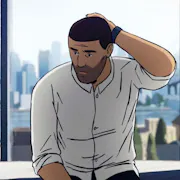
These documentaries don’t just look directly at conflict itself, but its fallout and coverage. Flee, the brilliant animated documentary, charts the refuge experience in a novel way, and Never Look Away – directed by Lucy “Xena: Warrior Princess” Lawless – is the story of the daring work of war reporter Margaret Moth. Secrets & Spies: A Nuclear Game explores the role that espionage plays in keeping Cold wars from turning hot.
Films can also challenge the narrative. Bitter Lake offers a fresh take on militant Islam, while Phantom Parrot – despite its cuddly title – explores the erosion of civil liberties in Western democracies. Tomorrow’s Freedom illustrates the conflict in Palestine, and Made in Ethiopia examines narratives of globalisation and capitalism. Buy Now: The Shopping Conspiracy and I Could Never Go Vegan are openly campaigning, right from their titles, but a film like 2073, from director Asif Kapadia (Amy, Camden) uses the vision of a future world to explore where we are now in a slightly less predictable way.

Flee

Bitter Lake
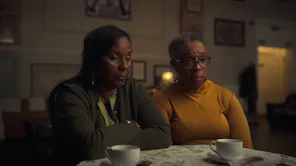
Collective action and activism are also well represented. Both Solidarity and Still the Enemy Within look at labour movements against very powerful opponents, while Tish is the story of a working-class photographer who showed a different picture of Thatcher’s Britain. To See Ourselves looks at the fight for Scottish Independence and Grenfell: Uncovered examines the causes of the devastating fire that hit a London tower block, and the survivors’ fight for justice.
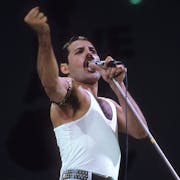
If that all seems like it might be simply too heavy, follow Mr Rodgers’ advice and look for the helpers. Critical: Between Life and Death looks at lifesaving treatment in trauma centres; think The Pitt but in reality. Fukushima: A Nuclear Nightmare and Disaster: The Chernobyl Meltdown are as much about the heroes who tried to save others as the nuclear disasters themselves, and Live Aid: When Rock ‘n’ Roll Took On The World examines the fund-raising efforts of Bob Geldof and every pop star of the 1980s.
Grenfell: Uncovered

Critical: Between Life and Death
Just like all of those do-gooders, many of these films set out to change the world for the better: whether by bringing some hidden history to life, shining a light on an underappreciated hero or simply making us think about things in a different way. Reality in motion can be a powerful thing.